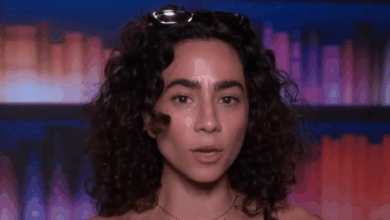
Big Brother Bosses Respond to ‘Off-Base’ Criticism of Controversial Season 27 Twist
Showrunners Allison Grodner and Rich Meehan spoke in an interview about their reasoning behind the ‘White Locust’ twist that took out former winner Rachel Reilly.

Last week saw the conclusion of Big Brother 27, a finale that garnered the highest ratings for the show in three years. But, only a month ago, fans of the hit CBS summer series were expressing their outrage en masse with the show’s visit to the “White Locust,” in what would end up becoming one of the most controversial twists in the show’s history.
Episode 29 saw the remaining nine houseguests celebrate a huge accomplishment in the game of Big Brother: Making it to jury. And while they thought production was throwing them a swanky soiree to commemorate the occasion, it turned out to be the setup for a game-changing turn. Over the course of one, action-packed night, the players competed for safety (won by Ava Pearl) and kicked off a dramatic and tense chain of picks to complete a timed challenge, first seen in the spinoff Big Brother Reindeer Games. Every subsequent pick had the time to finish the challenge reduced. The first person to fail the challenge would be immediately eliminated on the spot.

Naturally, the house broke into chaos with this concept. Lies were told, and arms were pulled. Vince Panaro successfully got both of his tight allies Lauren Domingue and Morgan Pope to the next round, but unintentionally set up further tensions between the two. And all culminated in the season’s lone returnee, Rachel Reilly, having her game end in the “Hamster Wheel of Death.” The former winner couldn’t complete the maze in 2 minutes and 30 seconds and was taken out, having never received an eviction vote or even hit the block up to that point. The “White Locust” twist, as well as Rachel’s elimination, prompted a massive response from both the Big Brother fanbase and alumni
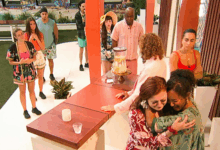


Showrunners and executive producers Allison Grodner and Rich Meehan addressed the controversy in a recent interview with Entertainment Weekly. Most prominently, they addressed the critique that the twist “didn’t feel like Big Brother,” choosing to outright eliminate someone through competition rather than a typical eviction vote.
“I think that’s off-base,” Grodner reasons. “There absolutely was a social element to this. In Reindeer Games as well. Remember, not everyone was going to go into that wheel. So your relationships and where you stood in the hierarchy of things and your threat level and the way that you worked in those 10 minutes and jockeyed for position [were key].”
“It was absolutely built to be social and strategic as well as competitive,” adds Meehan.
Grodner uses the season’s eventual winner, Ashley Hollis, as an example of their point. “Ashley was part of that same alliance that Rachel was in, but yet no one said to put her in the wheel. Why was that? I think that the way that you worked those intervals was critical in terms of your survival during the White Locust twist. So I do think there’s a social element.”
The two went on to explain why they chose to bring the competition from Reindeer Games into Big Brother proper. The way Grodner and Meehan see it, the concept actually baked much of a typical week of the show into one bite-sized piece.

“When it was originally designed, we looked at the layers of Big Brother from a social and strategic level,” explains Meehan. “When we looked at this, we’re like, ‘Well, the initial challenge is kind of like an HOH, you can save yourself. But then you start to chain, and if you get sent to the hamster wheel, it’s kind of like a Veto, where you have the opportunity to save yourself. Now, the big difference is instead of saving yourself with a vote after, you have to save yourself with a vote before. So you have to strategically and socially figure out how you’re going play that to determine whether you’re going into the wheel with enough time, or whether you’re going to avoid going into the wheel. So the social and strategic element precedes it versus happening after.”
Of course, the showrunners understand that much of the response comes from the fact that Rachel was the one to go. And while Grodner says emphatically that nobody wanted the legend to go out on a twist like this, to her, it was a situation she put herself in entirely.
“It was interesting because [Rachel] single-mindedly needed to get on that wheel,” says Grodner. “In her mind, that was the strategic move for her. Ultimately, could she have avoided it? You know, it is possible. She had other allies that could have gone up in her place. It’s her own ally that put her in the wheel.”
Of course, that’s not to say Grodner and Meehan were completely immune from the criticism. Indeed, the former reveals in the interview that she received death threats from fans over the twist. But the two would rather look on the sunny side of the discourse, as Meehan says, “In Season 27 of a show, if you can generate that much conversation and that much buzz…”
Given their attitude, it begs the question: Will another “Hamster Wheel of Death” twist appear in Big Brother moving forward?
“It’s definitely something we’ll look at,” Meehan answers. “Is it something that could come back? It probably could come back. Will it definitely come back every season? I don’t know about that.”
Grodner ends the interview by telling players — and fans — that future appearances of the twist should be more expected than unexpected. “Future houseguests should be ready.”